


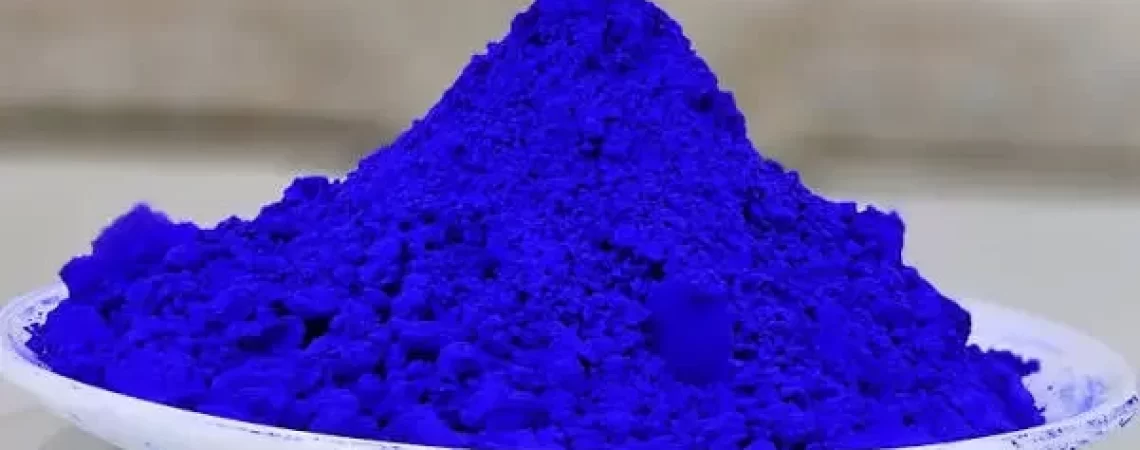
Rubber manufacturers use ultramarine blue pigment because it holds its color under heat, UV exposure, flexing and chemical contact, which are the four conditions that make most organic dyes fade or migrate in rubber compounds. It is also non-toxic and low in heavy metals, which matters for automotive parts, footwear and any rubber product that touches skin.
If you make rubber seals, gaskets, hoses, footwear components or industrial belts and you are comparing pigment options, this guide covers where ultramarine blue works best, the technical properties that matter for rubber compounding, how to pick the right grade, and what to check before placing a bulk order.
What Is Ultramarine Blue Pigment
Ultramarine blue is an inorganic synthetic pigment (color index Pigment Blue 29) made from kaolin, sodium carbonate, sulfur and silica through a controlled kiln process. Unlike organic pigments and dyes, it is chemically stable at high temperatures and does not break down under UV light, which is exactly what rubber curing and outdoor use demand.
Why Rubber Manufacturers Choose Ultramarine Blue Pigment
Rubber compounding involves heat, pressure, movement and, in many end uses, sunlight. Ultramarine blue is chosen for rubber specifically because of the following properties.
- Heat and pressure resistance during molding and curing, so color does not shift or scorch during processing.
- UV and light stability for outdoor parts such as seals, hoses and footwear soles that sit in direct sunlight for years.
- Resistance to chemical degradation and oxidation, which keeps color stable when rubber parts contact oils, cleaning agents or road chemicals.
- Strong bond strength within the rubber matrix, which limits color loss or dulling as the product stretches and flexes repeatedly.
- Non-toxic, low heavy-metal formulation suitable for skin-contact consumer goods and compliant with international safety and environmental standards.
Where Ultramarine Blue Is Used in Rubber Products
| Rubber application | Why ultramarine blue fits |
| Automotive seals, gaskets and hoses | Withstands engine-bay heat, oil contact and years of outdoor UV exposure without fading |
| Footwear soles and components | Stays vibrant through repeated flexing, abrasion and sunlight exposure |
| Industrial belts and molded rubber parts | Resists mechanical stress and chemical exposure on the factory floor |
| Consumer and skin-contact rubber goods | Non-toxic profile makes it suitable where direct skin contact is a requirement |
Technical Properties That Matter Before You Compound
Not every ultramarine blue grade behaves the same way once it is mixed into rubber. Before you commit to a grade, confirm these properties against your own process conditions.
| Property | Why it matters in rubber compounding |
| Particle size and dispersion | Determines how evenly the pigment spreads through the compound without streaking |
| Heat stability | Must exceed your curing and vulcanization temperature with a safety margin |
| Light and UV fastness | Critical for any part that will be used or stored outdoors |
| Chemical resistance | Matters where the finished part will contact oils, solvents or cleaning chemicals |
| Toxicity and compliance profile | Confirms suitability for skin-contact, food-adjacent or children’s products |
How to Select the Right Ultramarine Blue Grade for Your Rubber Formulation
- Define the end-use environment first. Indoor industrial belts have different requirements than outdoor automotive seals or footwear that sees years of sunlight.
- Match heat resistance to your actual curing temperature, not just the pigment’s general heat rating, since real curing conditions vary by rubber type and process.
- Confirm the compliance standards your finished product needs, such as REACH, RoHS or skin-contact safety, before you finalize a grade.
- Ask your supplier for a certificate of analysis and a small dispersion trial batch so you can check color consistency in your own compound before scaling up.
- Run the trial batch through your actual curing and flexing conditions, then compare color retention against your current pigment before switching your full production line.
Ultramarine Blue vs Other Blue Colorants for Rubber
Rubber manufacturers sometimes compare ultramarine blue against phthalocyanine blue or blue-tinted masterbatches. In short, ultramarine blue generally offers better heat stability and a non-toxic profile, while phthalocyanine blue can offer a stronger tinting strength at very low loading rates. The right choice depends on your target shade depth, your curing temperature and whether skin-contact compliance is a requirement for your finished product. If you are unsure which fits your formulation, ask your pigment supplier for a side-by-side trial rather than switching based on data sheets alone.
Sourcing Ultramarine Blue Pigment for Rubber at Industrial Scale
RS Pigments has manufactured ultramarine blue and violet pigments since 1920, with a dedicated industrial-grade ultramarine blue facility in Hathras, Uttar Pradesh, India, and supply relationships in more than 35 countries. Our ultramarine blue pigment range includes grades built for rubber compounding, with dispersion, heat stability and compliance documentation available on request. You can review our quality and compliance standards before requesting a formulation trial, and see the full technical profile on our ultramarine blue for rubber applications page.
Frequently Asked Questions
Is ultramarine blue pigment safe for rubber products that contact skin?
Yes. Ultramarine blue is non-toxic with a low heavy-metal profile, which is why it is widely used in footwear, consumer rubber goods and other skin-contact applications. Always confirm the specific compliance documentation, such as REACH or RoHS, for your target market.
What temperature can ultramarine blue pigment withstand during rubber curing?
Ultramarine blue is stable at high processing temperatures well above typical rubber curing ranges, but the exact threshold depends on the grade. Ask your supplier for the heat stability rating of the specific grade you are evaluating and match it against your actual curing temperature.
Does ultramarine blue pigment fade in outdoor rubber applications?
No, this is one of its main advantages over many organic dyes. Ultramarine blue maintains color stability under prolonged UV and sunlight exposure, which is why it performs well in automotive seals, hoses and outdoor footwear components.
How much ultramarine blue pigment is typically used in a rubber compound?
Loading rates vary by desired shade depth, the base rubber color and the specific formulation, and typically fall in a low single-digit percentage range by weight. Your supplier should confirm an exact starting dosage for your formulation and adjust based on your trial batch results.
Can ultramarine blue be used in colored automotive rubber parts?
Yes. Its heat resistance, UV stability and chemical resistance make it a common choice for automotive seals, gaskets and hoses that are exposed to engine heat, oils and prolonged outdoor conditions.
How do I request a sample or a bulk quote?
You can contact our team with your target shade, curing conditions and compliance requirements, and we will recommend a grade and arrange a trial batch before you commit to a bulk order.