


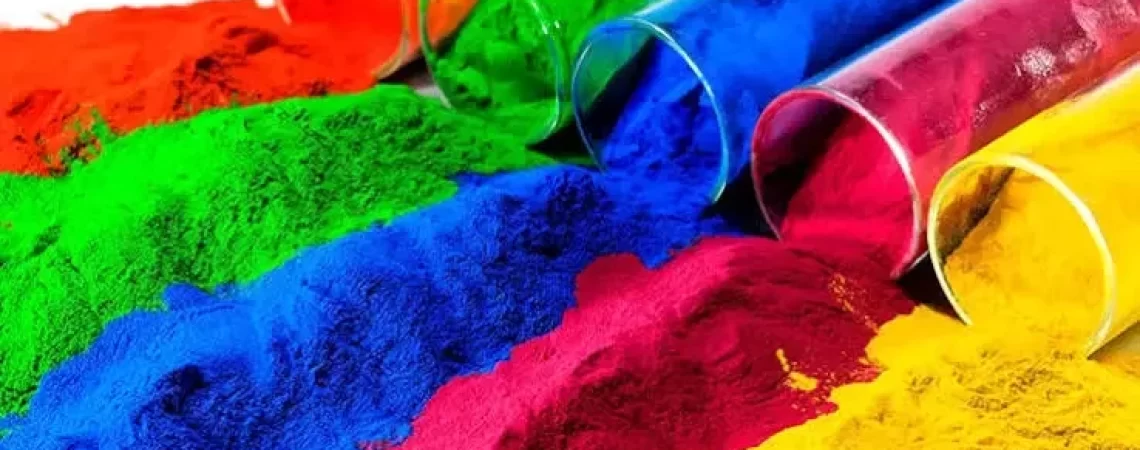
Picking a pigment supplier is one of those decisions that looks simple on a spec sheet and gets expensive when it’s wrong. Two suppliers can quote the same color index and the same price per kilogram, and still produce completely different results once the pigment hits your production line. One delivers consistent batches for five years. The other sends you a shade variation in month four that throws off an entire production run.
This guide covers what actually separates a reliable pigment supplier from a risky one, so you know what to check before you commit, not after.
Why the Supplier Decision Matters More Than the Spec Sheet
A pigment’s technical datasheet tells you what it should do under ideal conditions. It doesn’t tell you whether the supplier can reproduce that result batch after batch, whether they’ll still be shipping reliably during a demand spike, or whether their documentation will hold up if a regulator or a customer asks for compliance proof.
Most sourcing problems trace back to one of three gaps: inconsistent batch quality, weak compliance documentation, or a supply chain that can’t handle real-world lead times. None of these show up on a first quote. All three show up eventually.
7 Things to Check Before You Commit to a Pigment Supplier
- Batch-to-batch consistency. Ask for data on shade variation across multiple production runs, not just one sample. A single good batch proves nothing.
- Compliance documentation. REACH, RoHS, and FDA (for cosmetic or food-contact grades) shouldn’t be a one-line claim. Ask for the actual certificates and safety data sheets.
- Production capacity. Can they support your current volume and your volume in two years, or will you be renegotiating supply the moment you scale?
- Technical support. A supplier who can help troubleshoot a dispersion issue or recommend a grade for a new application is worth more than one who just ships boxes.
- Logistics and lead time. Ask specifically how they handle international shipping, customs documentation, and what happens if a shipment is delayed.
- Sustainability practices. Heavy-metal-free, non-toxic formulations matter increasingly for both regulatory reasons and end-customer expectations.
- Willingness to provide samples. A supplier confident in their product will get you a trial sample without friction. Reluctance here is worth noticing.
Warning Signs vs What a Reliable Supplier Actually Provides
| Warning Sign | What a Reliable Supplier Provides Instead |
| Vague answers about batch consistency | Documented shade variation data across multiple production runs |
| “Compliant” claimed with no paperwork | Actual REACH, RoHS, and FDA documentation on request |
| No named technical contact | A technical team you can reach directly for formulation support |
| Unclear or unstated lead times | Clear production and shipping timelines, communicated upfront |
| Reluctance to send a sample | Samples available for trial before you commit to bulk volume |
| Single point of production, no backup | Established production capacity with a track record across markets |
Manufacturer vs Trading Company: Why the Distinction Matters
Not every “pigment supplier” actually manufactures pigment. Some are trading companies or resellers, sourcing from various producers and reselling under their own name. This isn’t automatically a problem, but it changes what you should expect.
| Factor | Direct Manufacturer | Trading Company / Reseller |
| Batch consistency control | Direct control over production process | Depends on whichever producer they sourced from that cycle |
| Technical support depth | Can advise on formulation, since they know the product’s chemistry firsthand | Often limited to passing along the manufacturer’s documentation |
| Pricing | Generally more competitive without a middleman markup | Additional margin built into the price |
| Supply reliability | Direct visibility into production schedules | Dependent on their supplier’s availability |
| Customization | Can adjust particle size or grade for your specific application | Limited to whatever the manufacturer already produces |
Neither model is inherently wrong, but you should know which one you’re buying from, since it changes what kind of support and consistency you can reasonably expect.
Questions Worth Asking on Your First Call
- How many production batches do you run per month, and can I see consistency data across them?
- What compliance certifications do you hold, and can you send documentation directly?
- What’s your typical lead time from order to delivery, including international shipping?
- Can I get a sample before committing to a bulk order?
- Do you offer technical support if I run into a formulation issue after switching suppliers?
- What happens if there’s a quality issue with a shipment, what’s the resolution process?
A supplier who answers all six clearly and quickly is usually the one who delivers what they promise once you’re actually placing orders.
What This Looks Like at RS Pigments
We’ve been manufacturing ultramarine blue and ultramarine violet pigments for over 90 years, supplying more than 1,000 customers across 35+ countries, with a 99.99% quality standard maintained across production runs. As a direct manufacturer rather than a reseller, our technical team works directly with customers formulating for paints, inks, plastics, rubber, paper, and laundry and textile applications. Our products comply with REACH, RoHS, and FDA cosmetic-grade regulations, and we provide full technical and safety documentation on request. You can see our process in more detail on our quality control page and learn more about us here.
Frequently Asked Questions
How do I know if a pigment supplier’s batches are actually consistent?
Ask for shade variation data across several production runs, not a single sample, and if possible, request samples from two different batches to compare directly.
What compliance certifications should a pigment supplier have?
At minimum, look for REACH and RoHS compliance for general industrial use, and FDA cosmetic-grade compliance if the pigment will be used in cosmetics, food packaging, or children’s products.
Is it worth paying more for a direct manufacturer over a trading company?
Often yes, particularly if you need technical support, custom grades, or guaranteed batch consistency, since a direct manufacturer has visibility and control that a reseller typically doesn’t.
How long should it take to get a sample from a new pigment supplier?
A supplier with real production capacity should be able to arrange a sample within days to a couple of weeks, depending on the grade and shipping destination. Extended delays or reluctance are worth treating as a warning sign.
What’s the biggest mistake companies make when switching pigment suppliers?
Switching based on price alone without validating batch consistency and compliance documentation first. A cheaper pigment that requires higher loading to achieve the same color, or that causes a compliance issue later, often costs more in the long run.
Ready to Compare?
If you’re currently evaluating pigment suppliers, we’re happy to send a sample and walk through your specific application requirements with our technical team. Contact us to start the conversation.